India's SaaS ecosystem is maturing fast. What started as a services-led economy is rapidly evolving into a product-first landscape — and 2026 is the year that shift becomes undeniable.
At JaVia Ventures, we work closely with enterprise clients across India, and the patterns we're seeing on the ground are unmistakable. The companies winning today aren't the ones with the most features — they're the ones with the sharpest focus.
Three trends, in particular, are reshaping how enterprise software is built, sold, and adopted in India. Understanding them isn't optional — it's the difference between building products that thrive and building products that quietly die.
1. Vertical SaaS Is Eating Horizontal Tools
Generic horizontal SaaS tools — your project management apps, your CRMs, your all-in-one platforms — are losing ground to purpose-built vertical solutions. In 2026, Indian enterprises are increasingly replacing broad-purpose software with tools built specifically for their industry.
The logic is simple. A salon owner doesn't need a project management tool with Gantt charts and sprint planning. They need a system that understands time-slot management, walk-in vs. appointment flows, and service-based scheduling. A construction company doesn't need a generic inventory tool — they need one that understands material grades, site logistics, and compliance documentation.
We're seeing this firsthand while building Jayple. Rather than adapting a generic booking tool for grooming businesses, we built ground-up for that specific workflow. The result: higher adoption, lower churn, and users who actually understand the product on day one.
The implication for product studios is clear: stop building for everyone. Build for someone specific. The more niche your product, the deeper it can go — and the harder it becomes to replace.
The best SaaS product for a salon isn't a generic booking tool — it's a salon-first platform. Specificity wins.
2. AI-Native Products Are Setting the New Baseline
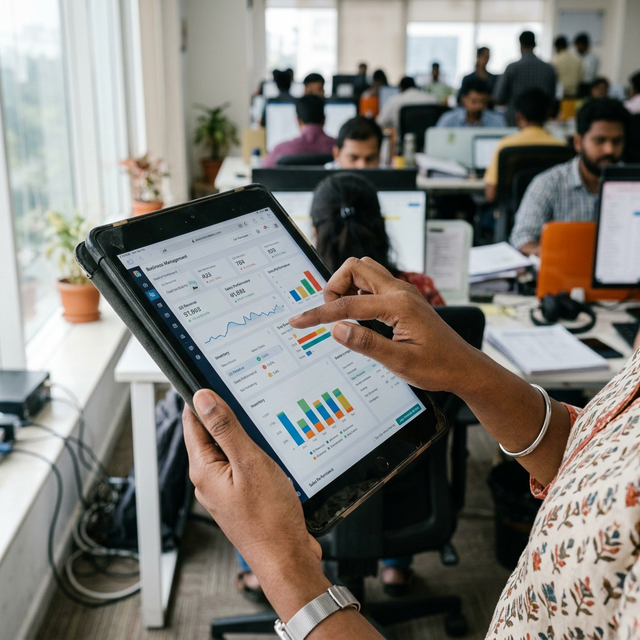
AI is no longer a feature — it's an expectation. Indian enterprise teams are no longer asking 'does it have AI?' They're asking 'how deeply is AI integrated into the workflow?'
This shift changes what an MVP looks like. Two years ago, a basic CRUD application with clean UI could be called a SaaS product. Today, that same application feels incomplete without intelligent defaults, smart suggestions, predictive inputs, and automated workflows.
For product studios like JaVia Ventures, this means the engineering bar has moved permanently. Every new product we scope now includes an AI integration layer from day one — not as a bolt-on feature, but as a foundational architectural decision.
The enterprises we work with are evaluating SaaS vendors on AI depth, not AI presence. They want to know: does the AI learn from our usage patterns? Does it reduce manual steps over time? Does it surface insights we wouldn't have found ourselves? These aren't nice-to-haves anymore. They're table stakes.
The teams that treat AI as a marketing checkbox will lose to the teams that treat it as a core product capability.
3. Mobile-First SaaS Is Non-Negotiable
India's internet is mobile. Over 70% of enterprise SaaS interactions in India happen on mobile devices — yet most SaaS products are still desktop-first with a mobile afterthought.
The teams winning in 2026 are those who design mobile-first and desktop-second. This isn't about responsive design — it's about rethinking the entire interaction model for a touch-first, small-screen, intermittent-connectivity environment.
Consider the average Indian SMB owner. They're checking their business dashboard between customer meetings, on a ₹15,000 Android phone, on a 4G connection. If your SaaS product requires a desktop browser and stable broadband to function, you've already lost them.
At JaVia, every product we build starts with the mobile experience. The desktop version is an enhancement, not the default. This philosophy has directly influenced how we architect Jayple, Genfess, and every client project we take on.
If your SaaS product doesn't work perfectly on a ₹15,000 Android phone, you're not building for India — you're building for a fantasy.
What This Means for Your Business
Whether you're building a SaaS product from scratch or evaluating your existing platform, 2026 demands clarity on these three fronts: vertical specificity, AI integration depth, and mobile experience quality.
The enterprises that invest in these three pillars now will dominate their verticals within 18 months. The ones that don't will find themselves competing on price in a race to the bottom.
At JaVia Ventures, these aren't theoretical principles — they're the lens through which we evaluate every product engagement. If you're building software for Indian enterprises, these trends aren't optional reading. They're your roadmap.
Have a project in mind?
At JaVia Ventures, we build scalable digital products and enterprise-grade web platforms. Let's discuss how we can help your business grow.
Start a Conversation